Seethamma Vakitlo Sirimalle Chettu
Director: Srikanth Addala
Seethamma Vakitlo stars Mahesh Babu, Venkatesh, Prakash Raj, Anjali, Samantha
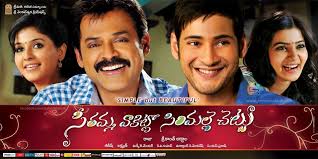
Seethamma Vakitlo talks about the bro-mance between two brothers. It was not your average typical Telugu Movie as Mahesh Babu ( Chinnodu) and Venkatesh (Pedhodhu) do not do any fighting except threatening to throw a punch or kicking plant pots; instead, it was about how the parents of the two want to fix Pedhodu's marriage with Anjali (Seetha) . While Seetha is all for the marriage Pedhodu feels indifferent towards her and treats her like a servant; even Chinnodu treats her poorly. The brothers were rowdy and did not have jobs because they did not want to change their attitudes towards work and towards life which takes its toll on the women because they were doing all the work. Every word coming out of the womens's mouth was that they have this chore to do that chore to do or they were comforting the men . Seetha leaves her house and her parents to serve her fiance's family until she and Venkatesh are of marriage-able age. The movie establishes virtue in traditional roles of women .Even Samantha and her friends were treated to a lecture about the importance of braided hair and flowers in the hair.
There was no actual plot in this movie , just some problems within an Indian family and of usual dilemnas concerning marriage. But this is not really the problem that should be addressed of Telugu cinema or in any other Indian cinema. The problem is with attitudes towards women in the cinema. Women in Telugu cinema have no intellectual role. They do not make any important decisions they are constantly pushed into domestic roles which only include taking care of husband and children. What annoys me further is that in a typical Telugu movie while the actors know Telugu the actresses are not from Andhra but are North Indians with a pretty face and body. I would not mind if the North Indian woman who can speak Telugu fluently but the pattern holds for any movie you watch. It is a pity that
1) Tollywood does not think that actual Telugu speaking women are pretty and do not have them act.
2) Telugu superstars think only their sons have a right to this legacy and discourage their daughters from acting, as stated by Lakshmi Manchu. http://articles.timesofindia.indiatimes.com/2012-01-05/news-interviews/30592741_1_mani-ratnam-film-film-industry-three-films
The acting was very colorful in the movie and the characters were hilarious. Although there should have been some series of events which change the character's personality slowly instead we have one personality altering event
Director: Srikanth Addala
Seethamma Vakitlo stars Mahesh Babu, Venkatesh, Prakash Raj, Anjali, Samantha
Seethamma Vakitlo talks about the bro-mance between two brothers. It was not your average typical Telugu Movie as Mahesh Babu ( Chinnodu) and Venkatesh (Pedhodhu) do not do any fighting except threatening to throw a punch or kicking plant pots; instead, it was about how the parents of the two want to fix Pedhodu's marriage with Anjali (Seetha) . While Seetha is all for the marriage Pedhodu feels indifferent towards her and treats her like a servant; even Chinnodu treats her poorly. The brothers were rowdy and did not have jobs because they did not want to change their attitudes towards work and towards life which takes its toll on the women because they were doing all the work. Every word coming out of the womens's mouth was that they have this chore to do that chore to do or they were comforting the men . Seetha leaves her house and her parents to serve her fiance's family until she and Venkatesh are of marriage-able age. The movie establishes virtue in traditional roles of women .Even Samantha and her friends were treated to a lecture about the importance of braided hair and flowers in the hair.
There was no actual plot in this movie , just some problems within an Indian family and of usual dilemnas concerning marriage. But this is not really the problem that should be addressed of Telugu cinema or in any other Indian cinema. The problem is with attitudes towards women in the cinema. Women in Telugu cinema have no intellectual role. They do not make any important decisions they are constantly pushed into domestic roles which only include taking care of husband and children. What annoys me further is that in a typical Telugu movie while the actors know Telugu the actresses are not from Andhra but are North Indians with a pretty face and body. I would not mind if the North Indian woman who can speak Telugu fluently but the pattern holds for any movie you watch. It is a pity that
1) Tollywood does not think that actual Telugu speaking women are pretty and do not have them act.
2) Telugu superstars think only their sons have a right to this legacy and discourage their daughters from acting, as stated by Lakshmi Manchu. http://articles.timesofindia.indiatimes.com/2012-01-05/news-interviews/30592741_1_mani-ratnam-film-film-industry-three-films
The acting was very colorful in the movie and the characters were hilarious. Although there should have been some series of events which change the character's personality slowly instead we have one personality altering event

